
Reviewed · THRACIAN HERITAGE & TOMBS
Picking Roses Workshop & Extracting Rose Oil in the Rose Valley
Bulgaria’s rose country is best understood with your hands busy. This three-hour experience lets you pick Kazanlak roses in traditional dress, taste rose-based treats, and see how a small distillery turns petals into oil and rose water.
I like the strong local focus and the private format. You are not just looking at fields from a roadside stop. You take part in a seasonal custom, then see the craft at an old house and a rose factory. The main drawback is timing: rose picking depends on the crop, so the program may change, and transportation is not included.
Key points to know before booking
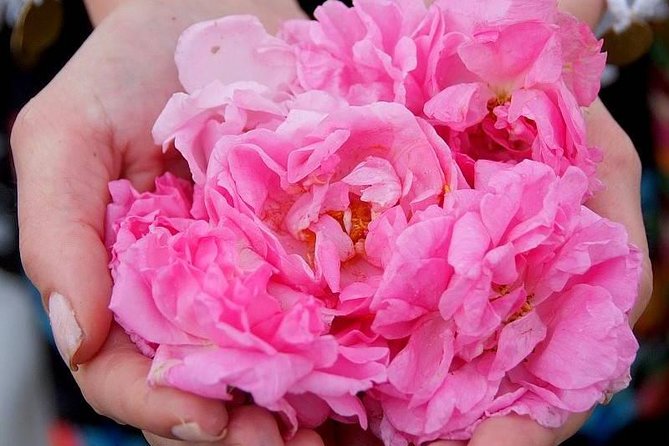
- Rose picking is seasonal: The folk-costume picking ritual takes place during the rose-picking season, and the order of stops can change as the flowers mature.
- You taste three local specialties: Rose sweet, gulovitsa, and rose liqueur are included.
- The craft is shown, not just explained: You see a mini distillery used to extract rose oil and rose water.
- The soap workshop adds a practical finish: A Bulgarian rose factory demonstrates how rose soap is made, depending on the time of year.
- It is a private activity: Only your group participates, with guide service at the stops.
- Plan your own transport: The experience starts and ends at the meeting point in Karlovo, and transportation is not included.
Why rose picking is the right way to meet Bulgaria’s Rose Valley
The Rose Valley is not simply a pretty place to photograph. It is a working farming region tied to one of Bulgaria’s best-known products: rose oil. The oil-bearing Kazanlak Rose grows in these latitudes, and its harvest has become one of the country’s most respected customs.
That makes the hands-on part important. You learn what the harvest means by joining the ritual rather than treating the rose fields as a quick photo stop. Local rose pickers wear Bulgarian folk costumes, and you get to take part in the same basic activity: gathering the flowers during the short picking season.
I like that the day connects three stages of the process. First, you meet the flower in the field. Next, you see how petals become oil and water. Finally, you visit a factory where rose soap is made. The route gives you a useful sense of how a familiar souvenir begins.
The timing also keeps the outing focused. At roughly three hours, this is not an all-day excursion with long stretches of transport. It works well if you are based in Karlovo and want a compact cultural activity, though the short length means each stop may be fairly concentrated.
More Thracian tombs and Rose Valley days:
- Valley of the Thracian Kings, Hidden Treasures
★ 5.0 · 28 reviews - Kazanlak-Rose Valley-Valley of the Thracian Kings – private tour from Plovdiv
★ 5.0 · 15 reviews - Private Access Rose Festival Kazanlak 05-07.06.2025
★ 4.5 · 6 reviews
Starting at 9:00 in Karlovo
The activity starts at 9:00 am in Karlovo and ends back at the meeting point. Since transportation is not included, you need to arrange your own way to Karlovo and between any stops if the program requires it. That detail matters more than it might first appear. Confirm the exact meeting point and the final route before setting out.
The tour is offered in English, and guide services are provided at the stops. The activity is private, so your group does not join a larger busload. That gives you a more personal setting for the demonstrations and makes it easier to ask questions about the plants, methods, and local customs.
The route may include Karlovo, Karlovo Old Town, Damascena Ethnographic Complex near Kazanlak, and the wider Valley of Roses. The operator confirms whether the program takes place in Karlovo, Damascena, or both. The exact order is reconfirmed with customers because flowering dates vary from one part of the region to another.
That flexibility is sensible. It also means you should not treat the stop order as fixed. The roses determine the schedule, not the printed plan.
Picking roses in folk costume
The rose-picking ritual is the emotional center of the activity. During the proper season, you put on traditional folk clothing and join local rose pickers among the flowers. This is a simple act, but it gives the morning a sense of place that a standard factory visit cannot provide.
The Kazanlak Rose is prized for its oil, not just its appearance. Its petals are gathered for distillation, and the harvest has to follow the season. You will get a closer look at the source of the product before seeing the machinery and methods used later.
The costume element is more than decoration. It frames the activity as a local custom, with clothing and harvesting presented together. You can expect an informal ritual rather than a formal museum performance. The supplied information does not promise a specific field size, harvest quantity, or length of time spent picking, so keep your expectations practical.
The biggest limitation is also clear. If you visit outside the rose-picking season, the ritual may not be available. The program can be amended because the roses mature at different times in the region. Ask for the expected version of the program for your date before booking if the picking itself is your main reason for going.
Tasting rose sweet, gulovitsa, and rose liqueur
After the picking, the tasting gives you a direct way to judge how Bulgarian rose products are used at the table. The included treats are rose sweet, gulovitsa, and rose liqueur.
Rose sweet is the easiest introduction. It offers the floral character in a spoonable dessert form, while gulovitsa provides another local taste connected with the rose tradition. Rose liqueur rounds out the tasting with a drink made in the same flavor family.
The tasting is included, so you do not have to budget separately for this part. Still, it is best to see it as a short cultural tasting rather than a full meal. No broader menu is provided, and the activity lasts about three hours. If you need lunch afterward, plan for it separately.
This is one place where personal taste matters. Rose flavors can be delicate, sweet, and strongly floral. The point is not to find one universal favorite. It is to understand how the flower appears in Bulgarian food and drink, not only in cosmetics.
A few more Bulgaria day trips to weigh up
- Private Ski Lesson in Bulgaria
★ 5.0 · 92 reviews - Ski and Snowboard lessons- Borovets ski resort
★ 5.0 · 38 reviews - Bulgarian Food tasting, cullinary-historical tour, Cooking class
★ 4.5 · 15 reviews - Private Ski and Snowboard lessons in Bansko Bulgaria
★ 5.0 · 13 reviews
Learning the old-house distillation method
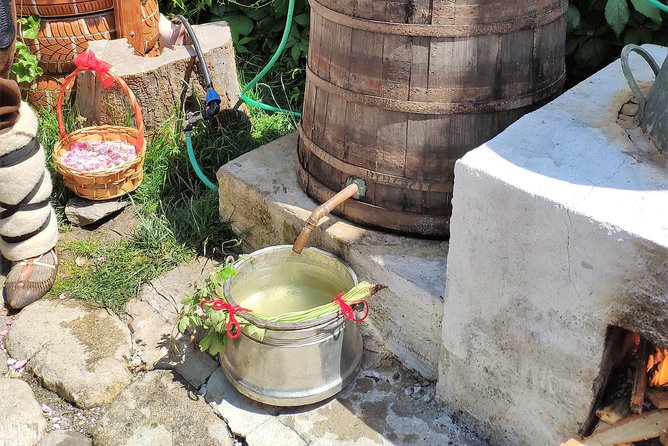
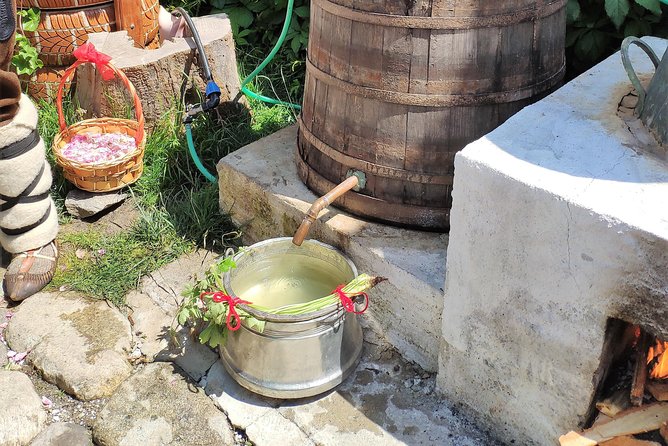
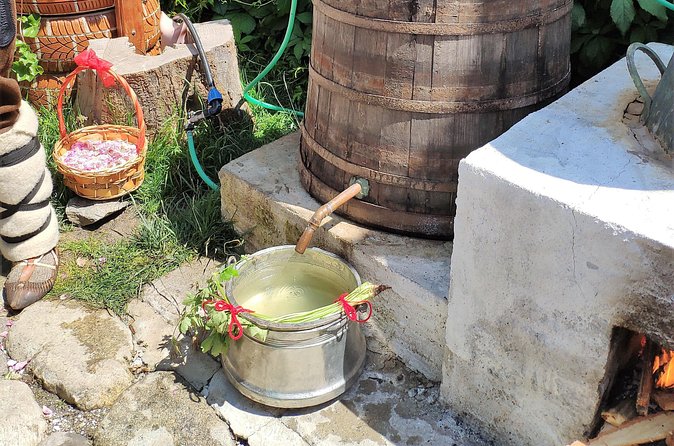
The next major part takes place at an old house, where you learn how rose oil is brewed and rose water is extracted. The setting gives the process a connection to daily life and older Bulgarian customs. You are not only shown a finished bottle. You see the basic transformation from fresh petals to useful products.
A mini distillery provides the demonstration. The equipment makes the method easier to understand, even if you have never seen plant distillation before. The rose petals are the raw material, and the demonstration explains how the valuable oil is separated and how rose water is produced.
I especially like this stop because it puts the price and reputation of rose products into perspective. A small bottle of rose oil represents a great deal more than a pleasant scent. It links farming, careful harvest timing, heating, separation, and bottling. The experience does not promise a technical course, but it should give you a clear working picture of the craft.
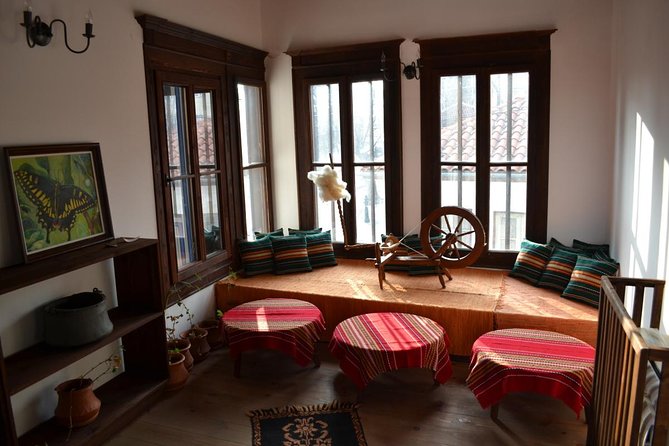
The old house also adds a human scale. Large factories can make production seem distant. Here, the craft is presented through a traditional setting and local customs shared by residents. That helps you see rose oil as part of community life, not just a product aimed at souvenir shoppers.
Exploring Karlovo and its old town
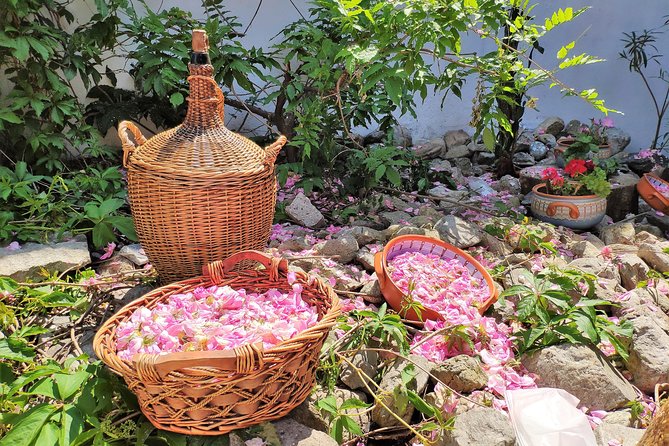
Karlovo is the starting point and one of the named stops. The program may include Karlovo Old Town, giving you a chance to see the local setting around the rose tradition.
The information supplied does not specify which buildings or landmarks you will visit in the old town, so you should not expect a detailed architectural tour of named sites. Think of this part as context for the custom. The old town helps connect the workshop to the place where people lived, worked, and passed on local practices.
Because the activity is private, you can ask the guide to explain how Karlovo fits into the region’s rose production. That is a useful question to ask on the day. It may also help you understand why the schedule can shift between Karlovo and Damascena.
The possible drawback is that the tour covers several kinds of stop in a short time. If you want a long, slow walk through the old town, three hours may not provide much room. The focus remains roses, production, and local customs.
Damascena Ethnographic Complex near Kazanlak
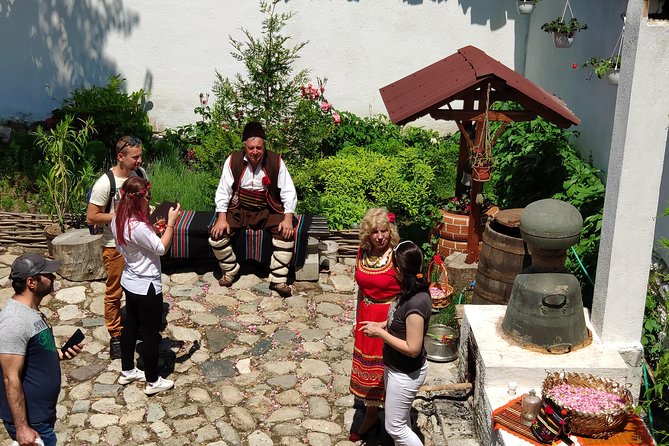
Damascena, near Kazanlak, is another possible destination. It combines the rose tradition with an ethnographic setting, making it a natural place for the distillation demonstration and local customs.
The name Kazanlak is closely tied to Bulgaria’s oil-bearing rose, and a stop in this area puts you closer to the heart of the Rose Valley. Depending on the flowering season and the confirmed route, you may visit Damascena instead of, or along with, Karlovo.
The exact order is not fixed. That is worth repeating because it affects how you plan your morning. The operator may alter the program according to when the roses mature in each area. You will receive confirmation of the working route with the activity provider.
A visit here suits you if you care more about how a local product is made than about ticking off a long list of sights. It is less suitable if you need a rigid schedule or a guaranteed set of stops. The flexibility serves the roses, but it asks you to be flexible too.
Seeing rose soap made at a Bulgarian factory
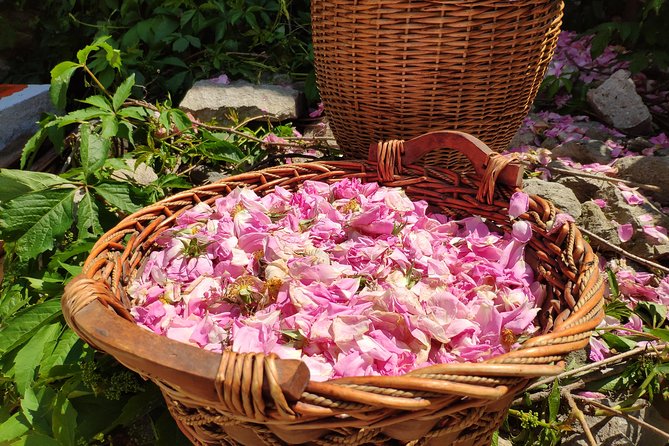
The rose factory adds a modern production angle. Here you see a demonstration of rose soap making, which shows how rose products move beyond oil and rose water into everyday cosmetics.
This stop is included depending on the time of year. The wording matters: rose soap making is part of the planned program, but the factory visit is not guaranteed for every date. Confirm it if this demonstration is important to you.
I find this a useful final step because it keeps the experience grounded in practical goods. Rose oil can sound rare and almost mysterious when presented in a tiny bottle. Soap makes the process more familiar. You can see how the rose becomes part of something ordinary and usable.
Do not expect a large industrial tour with a full production line unless that is confirmed separately. What is promised is a demonstration of rose soap making. The value comes from seeing the process and understanding the range of products made from the flower.
What the private format adds
This is a private activity for your group only. That usually matters most at hands-on stops. You can take part in the picking ritual without being lost in a large crowd, and you can ask the guide to slow down during the distillery or soap demonstration.
The English-language service is another practical advantage. Rose oil production has specialized terms, and an explanation in a language you understand makes the process more useful. The guide services are provided at the spots rather than described as a full transport service.
The private setup does not automatically mean the program is luxurious. Transportation is still your responsibility, and the schedule remains subject to the season. What you are buying is a more personal cultural visit, not a door-to-door excursion.
The activity is also described as suitable for most participants, with service animals allowed and public transportation nearby. No special physical requirements are stated. If you need specific information about walking distances or access at the old house and factory, ask before booking because those details are not provided.
Value, timing, and the season
No tour price is supplied here, so I cannot judge it against a precise amount. I would assess the value by looking at what is included: the picking ritual when in season, three tastings, the mini-distillery demonstration, guide service at the stops, and soap making.
That package is useful if you would otherwise pay separately for a rose tasting, a factory visit, and a cultural demonstration. The private format adds value for a couple, family, or small group that wants to ask questions and move at its own pace.
The value drops if your date falls outside the picking season and the factory visit is unavailable. The experience still includes the rose oil and rose water demonstration, but the most memorable seasonal elements may change. For that reason, I would make the flowering calendar your first booking question.
A three-hour duration is a good fit for a morning. You start at 9:00 and return to the meeting point, leaving the rest of the day open. Since transport is not included, allow extra time around the activity for getting to Karlovo and for any movement between destinations.
The cancellation terms are fairly forgiving if your plans are uncertain. You receive a full refund when you cancel at least 24 hours before the start time. Changes or cancellations within 24 hours are not accepted for a refund, and poor weather can lead to a different date or a full refund.
Who should book this rose workshop
I would recommend this to you if you want a local craft experience with several layers: farming, folk custom, food, distillation, and soap making. It suits people who enjoy seeing how a regional product is made instead of simply buying it in a shop.
Families may appreciate the short length and the hands-on element. The activity is suitable for most participants, and the private format can make it easier to keep children involved. The tasting also gives the morning a clear reward after the picking and demonstrations.
It is a good choice for photographers and culture-minded visitors during the rose season, especially if dressing in folk clothing and joining a local ritual appeals to you. The strong praise for the staff and guides also points to a well-run, friendly experience, with the most specific feedback calling it full of local flavor and suitable for everyone.
I would hesitate if you need guaranteed rose picking, a fixed route, or included transport. I would also look elsewhere if your main goal is a long historical tour of Karlovo or a full-day exploration of the valley. This is a focused workshop, not a broad regional sightseeing tour.
Final call: book it for the craft, not just the photograph
Book this activity if you want to understand Bulgaria’s rose tradition from field to finished product. The folk-costume picking, rose tasting, old-house distillation, and soap demonstration create a clear story in a short morning.
Before committing, confirm three things: the exact meeting point in Karlovo, which destinations will operate on your date, and whether the picking ritual and factory visit are available. If those details line up with your plans, this private English-language workshop offers an unusually direct way to meet the Rose Valley and the people who keep its customs alive.
FAQ
Where does the activity start?
It starts in Karlovo, Bulgaria, at 9:00 am.
Where does the activity end?
The activity ends back at the meeting point.
How long does the experience last?
It lasts approximately three hours.
Is transportation included?
No. Transportation is not included.
Is the activity offered in English?
Yes. The experience is offered in English.
Is this a private activity?
Yes. Only your group participates.
Will I pick roses during the activity?
You can take part in the rose-picking ritual during the rose-picking season. The program may change because rose maturity varies by region and date.
What food and drinks are included?
The tasting includes rose sweet, gulovitsa, and rose liqueur.
Will I see rose oil and rose water being made?
Yes. The activity includes a workshop demonstration using a mini distillery to show the extraction of rose oil and rose water.
Is the rose factory visit guaranteed?
The rose oil factory visit depends on the time of year. The program can also be adjusted according to local rose maturity.
Can I cancel for a full refund?
Yes, if you cancel at least 24 hours before the experience start time. Cancellations or changes made less than 24 hours before the start time are not refunded. If poor weather causes the activity to be canceled, you will be offered another date or a full refund.
Just added around Bulgaria
- Private Buggy Experience All Seasons in Pamporovo★ 5.0 · 3 reviews
- Transfer Plovdiv to Sofia airport/city with a car 3+1★ 5.0 · 3 reviews
- Plovdiv Roman Sights Self-Guided★ 4.5 · 3 reviews
- Private Winter Day Trip to the Rila Mountain★ 4.5 · 3 reviews
- 60-Minute Small-Group ATV Safari Tour in Bansko★ 5.0 · 3 reviews
- Chateau Copsa Wine Tasting Tours & Activities★ 4.5 · 3 reviews
- Transfer from Sofia to Stara Zagora★ 5.0 · 3 reviews
- Cook and Eat with a Local in Sofia★ 5.0 · 3 reviews
Thracian Heritage & Tombs, compared.
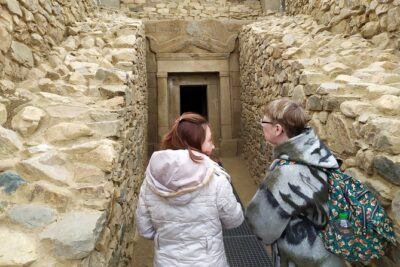

Kazanlak-Rose Valley-Valley of the Thracian Kings – private tour from Plovdiv
Read our review →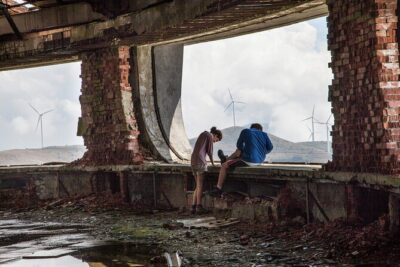
A Day trip to the Thracian Kings, The Valley of Roses & Buzludzha
Read our review →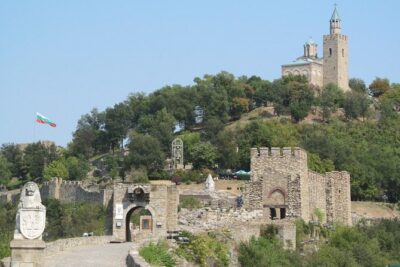
Veliko Tarnovo – Arbanassi – Shipka Memorial Church – private tour from Plovdiv
Read our review →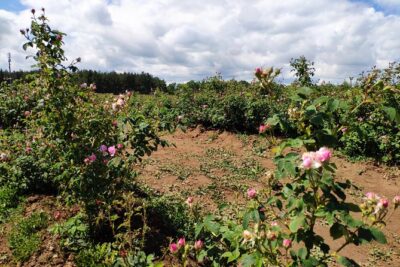
Private Access Rose Festival Kazanlak 05-07.06.2025
Read our review →
Symbol of the Communism Buzludzha monument and the Rose valley
Read our review →
Tour to Koprivshtitsa and the Buzludzha monument incl the Seuthes Thracian Tomb
Read our review →Browse the lists this tour appears in