
Reviewed · WALKING TOURS IN SOFIA
Guided Walking Tour of Sofia
Sofia’s story unfolds in layers, and this tour takes you through many of them in just two hours. You move from the gold-domed Alexander Nevsky Cathedral to Roman Serdica, medieval churches, royal monuments, and the communist-era heart of the city. The walk gives you a quick, useful map of central Sofia rather than a single narrow theme.
I like the small-group format, advertised for up to 10 people, and the fact that the tour can sometimes go ahead with only one booking. I also like the route’s variety: Roman ruins sit near government buildings, while Orthodox churches and a grand theater fill the spaces between. The main drawback is pace. Two hours covers a lot, so stops are brief and the tour gives you an overview rather than a thorough visit inside every sight.
Key points at a glance
- Roman Sofia beneath the modern city: See the Ancient Serdica remains found during subway construction, plus the fourth-century Rotunda of St. George.
- Three important church interiors: The route includes entry to Alexander Nevsky Cathedral, St. Sofia Church, and the Rotunda.
- Guides who bring different strengths: Diana, Jivko, Peter, and Petar have all led tours praised for clear English, local knowledge, and an easy manner.
- A compact central route: Start at Alexander Nevsky Cathedral and finish at the pedestrian stretch of Vitosha Boulevard.
- Useful in hot weather: The tour lasts about two hours, a sensible limit when Sofia temperatures reach 32 to 37 degrees Celsius.
- A first-day orientation: You will see the main center, but not the full city or an in-depth treatment of communism.
Why this walk works as a first look at Sofia
Sofia can feel confusing at first. Its broad boulevards, Orthodox domes, Roman remains, monumental government buildings, and modern shopping streets do not always seem to belong to the same city. This walk helps connect them.
The route stays in the central area, so you spend your time seeing sights rather than riding between them. You will also get a useful introduction to Bulgaria beyond Sofia. Several guides, including Peter, Jivko, Diana, and Petar, are described as comfortable discussing politics, culture, architecture, international relations, and the country’s past as well as the capital itself.
I would book this early in a Sofia stay. You finish on Vitosha Boulevard, a practical place to continue exploring, stop for a drink, or return later for restaurants and shops. The tour also helps you decide which places deserve a longer visit.
At $48.39 per person, this is not a bargain-priced free walk. It makes better financial sense if you value a private or very small group and want a professional live guide who can answer questions. If your group is large, group discounts may improve the value. The advertised group size is a maximum of 10, although the booking information also gives a maximum of 24 for the activity, so check the conditions for your date if group size matters greatly.
More Walking Tours in Sofia
- Communist Walking Tour of Sofia
★ 5.0 · 690 reviews - Sofia Highlights 2 Hour Sightseeing Walking Tour
★ 5.0 · 442 reviews - Private city walking tour of Sofia
★ 5.0 · 141 reviews
Alexander Nevsky Cathedral sets the tone
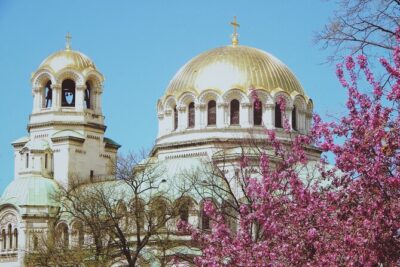
The meeting point is outside the entrance to the Patriarchal Cathedral of St. Alexander Nevsky. This is a strong place to begin because the cathedral is not simply a stop for photographs. It is one of Sofia’s main symbols, and the guide explains when, how, and why it was built.
You have about 15 minutes here. That is enough for an introduction and a look inside, but not for a slow architectural study. Give yourself a moment to notice the scale, domes, stonework, and interior decoration before the group moves on.
The cathedral is also a useful reminder that Sofia is a major center of Eastern Orthodox Christianity. Guides such as Jivko and Peter have been praised for explaining the city in a way that connects buildings to Bulgarian history, rather than treating each church as an isolated photo stop.
St. Sofia Church and the city’s early Christian past
The next stop is St. Sofia Church, one of the most important early Christian buildings in Southeastern Europe. The tour includes entry, and you have roughly 10 minutes inside.
The short visit matters because the church helps explain where Sofia got its name. It also gives you a chance to compare a comparatively restrained early basilica with the much larger and more ornate Alexander Nevsky Cathedral.
Do not expect a long, quiet visit with time to examine every detail. The route has ten more stops ahead. Still, this is one of the better uses of the tour’s limited interior time because St. Sofia is central to the city’s religious and architectural story.
Royal monuments and the Russian Church
From St. Sofia, the walk passes the equestrian Monument to the Tsar Liberator. The stop lasts about five minutes. Your guide explains the monument and its place in Sofia’s central ceremonial area.
The route then reaches the Church of St. Nicholas the Wonderworker, usually called the Russian Church. Its Russian Revival design gives the walk another architectural change after the large cathedral and older basilica. You have about five minutes here, enough to hear the background and admire the distinctive exterior.
These stops are brief, but they prevent the tour from becoming only a church circuit. You are seeing how religion, royalty, foreign influence, and national identity share the same few blocks.
Same base, a completely different day out:
- Rila Monastery and Boyana Church Full-Day Tour
★ 4.5 · 918 reviews - Sofia Escape Room – Teorema Rooms
★ 5.0 · 895 reviews - From Sofia: Rila Monastery & Boyana Church Day Tour
★ 4.5 · 866 reviews - Admission Ticket to the Museum of Illusions in Sofia
★ 5.0 · 659 reviews
The Ivan Vazov National Theater and Sofia’s civic face
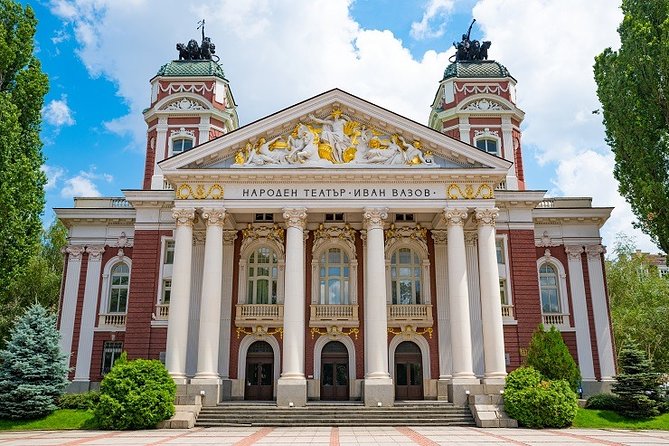
The National Theater Ivan Vazov is one of Sofia’s most recognizable public buildings. Its Neoclassical facade includes golden decoration and was designed by Viennese theater architects.
The tour gives this stop around five minutes. That may feel short if you enjoy architecture, but the theater is easy to find again after the walk. I would note the location and return later if you want a closer look.
The theater also brings a lighter, more elegant mood to the route. After several religious buildings and monuments, its formal facade and surrounding city space show Sofia as a European cultural capital, not only an old Balkan city.
Ancient Serdica beneath the subway
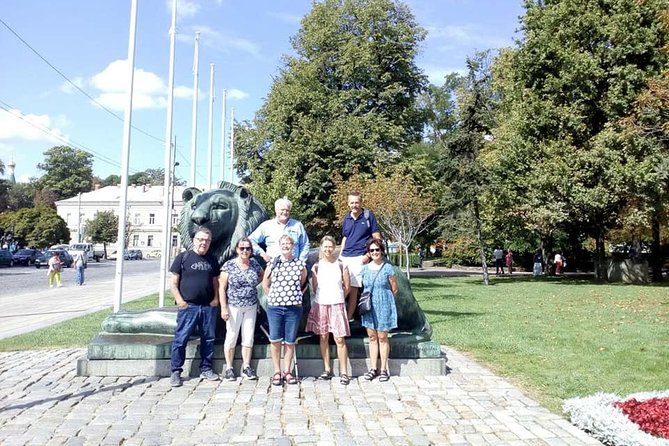
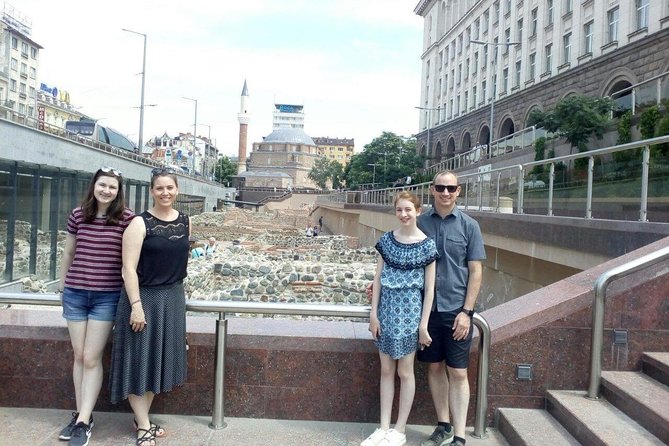
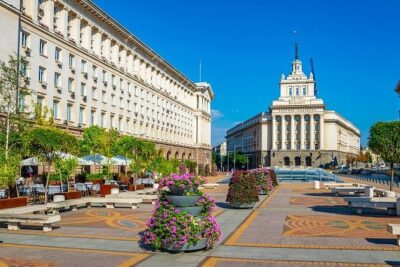
For many people, the Ancient Serdica Archaeological Complex is the most memorable part of the walk. The Roman remains were uncovered during subway construction in 2015, and they now appear in the modern center between the Presidency and the Council of Ministers.
This is a fine example of Sofia’s layers sitting almost on top of one another. You can look at Roman streets and structures while modern transport moves nearby. The tour spends about 10 minutes here, giving the guide time to explain the ancient town and how the remains came to light.
The setting is not a classic archaeological park separated from city life. That is part of its appeal. You see how new construction exposed the old city and how the remains now fit into the daily center.
Government buildings and the communist-era center
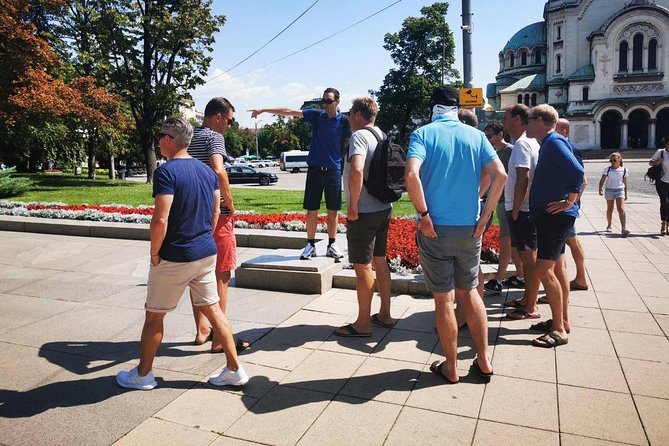
The walk continues past the Presidency and Parliament, viewed from outside. The guide explains who built them, when they were constructed, and aspects of Sofia during the communist period.
This portion is useful, but keep your expectations measured. The tour does not offer a full, in-depth study of communism. If that period is your main interest, you will need additional sightseeing beyond this route.
Still, the government buildings help you read the center’s layout. They also add political context to a walk that otherwise might focus too heavily on churches and ancient ruins. Guides praised for discussing present-day politics and international relations can make this section especially worthwhile, though the exact depth will depend on who leads your tour.
Mineral springs, Central Hall, and the Rotunda
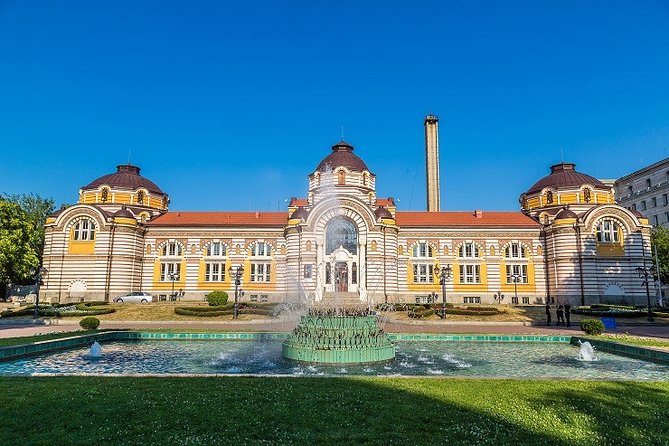
Near the Central Market Hall, the guide discusses Sofia’s mineral springs. The springs have been known and used since ancient times, and the stop adds a practical side to the city’s long past. You spend about five minutes here.
Then comes the Rotunda Church of St. George, one of Sofia’s best-preserved ancient buildings. This early Christian church is tucked into the modern center, making it another sharp example of old and new sharing the same space. Entry is included, and the planned stop lasts around five minutes.
The Rotunda deserves more time than the schedule allows if you are interested in Roman and early Christian architecture. I would treat the tour visit as an introduction, then return independently if opening times and access allow. The guide’s explanation helps you understand what you are looking at, while a later visit gives you more time to take it in.
Sveta Nedelya and the Palace of Justice
The cathedral of Sveta Nedelya is next. The church is dedicated to Saint Nedelya, and the adjoining square has played an important role in Sofia’s royal-era history.
Again, the scheduled stop is only about five minutes. That is enough for orientation, but not a complete visit. The square is also a useful place to pause mentally, since the route has moved from ancient religious history through royal monuments and into modern statehood.
The final major sight is Sofia’s Palace of Justice, home to several courts. Its exterior is known for grand architecture, while the interior has rare and notable features. The tour views it as part of the city walk rather than arranging a full court building visit, so you should not count on seeing the interior.
Finishing on Vitosha Boulevard
The walk ends at the start of Vitosha Boulevard, Sofia’s pedestrian shopping and dining street. This is a practical finish. You are not left at an isolated monument, and you can easily continue on foot from here.
The boulevard is also a good place to turn the tour’s broad introduction into your own Sofia plan. You might return toward the cathedral, explore more of the center, or stop for a meal. Some guides have even continued the conversation over coffee or a glass of wine after the official walk, but that should be treated as a personal extra rather than part of the package.
What the guides add to the experience
The guide can make or break a short city walk. A strong guide turns a string of buildings into a story and adjusts the talk to the group. Diana has been praised for clear English, a lively delivery, and a good sense of timing. Jivko is described as engaging and well prepared, with an academic background in Bulgarian history. Peter and Petar are frequently praised for patience, local insight, and answering questions fully.
Some tours have included unexpected additions, such as a look inside the university or a library area with old stained glass and a painting in a back room. Another guide took a participant to a museum with virtual reality that helped reconstruct a fortress wall. These extras are not guaranteed, but they show the value of a guide who knows the city beyond the standard route.
The weaker experiences appear connected to guide style rather than the route itself. A low-energy guide can make the history feel flat, and one reported tour began late and handled extreme heat poorly. If you visit in hot weather, ask early for shade and carry water. The route is only two hours, but most of it is outdoors.
Pace, weather, and practical comfort
Wear comfortable walking shoes. The route covers central streets, squares, archaeological areas, and pedestrian space, with repeated standing stops. Most people can take part, and the meeting point is near public transportation.
The stated duration is approximately two hours. Some people may wish it lasted four hours because there is much more to say about Sofia, but the shorter format has a benefit in summer. In temperatures above 30 degrees Celsius, two hours can be a sensible introduction before you seek shade or air conditioning.
Rain is less of a problem if the guide is flexible. One guide redirected part of a wet tour toward indoor or covered sights. That kind of adjustment is worth asking for, but it cannot be promised for every departure.
The tour is offered in English and includes a mobile ticket. Confirmation arrives when you book. Free cancellation is available up to 24 hours before the start time, while changes or cancellations inside that period are not accepted for a refund.
Who should book this Sofia walk?
I would choose this tour if you want a well-organized first orientation and prefer learning the city on foot. It suits first-time visitors, people with only a short stay, and anyone who wants Roman, religious, royal, and communist-era context in one compact outing.
It is also a good fit if you enjoy asking questions. A group of two to 10 gives you a better chance to speak with the guide than a large coach tour, and solo bookings may still operate rather than being canceled.
I would look elsewhere if you want a slow architectural study, a dedicated communism tour, or long interior visits. The route is broad by design. You will see many sights, but you will spend only a few minutes at most of them.
Should you book it?
Book this guided walk if $48.39 feels reasonable for a small-group experience and you want Sofia explained by a local English-speaking guide. The best reasons are the compact route, the Roman remains at Serdica, entry to three important churches, and the chance of a guide such as Diana, Jivko, Peter, or Petar adding useful local detail.
For the best experience, schedule it near the start of your stay, wear good shoes, bring water, and avoid the hottest part of the day if possible. Use the walk to get your bearings, then return to the places that catch your interest. If you want the whole story of Sofia, this is a starting point, not the final word.
FAQ
How long is the Guided Walking Tour of Sofia?
The tour lasts approximately two hours.
Where does the tour begin?
It begins at the entrance to the Patriarchal Cathedral of St. Alexander Nevsky in Sofia Center, at pl. Sveti Aleksandar Nevski.
Where does the tour end?
The tour ends at the beginning of Vitosha Boulevard in Sofia Center.
What language is the tour offered in?
The tour is offered in English with a professional live guide.
How large is the group?
The tour is advertised as a private or small-group experience with a maximum of 10 people. The additional booking information gives a maximum of 24 travelers for the activity, so check the group conditions for your date.
Does the tour enter any churches?
Yes. The route includes entry to Alexander Nevsky Cathedral, St. Sofia Church, and the Rotunda Church of St. George.
Is the tour suitable for most people?
Most people can participate. Comfortable walking shoes are recommended, and the activity takes place mainly on foot in the city center.
Can I cancel for a full refund?
Yes, if you cancel at least 24 hours before the experience starts. Cancellations or changes made less than 24 hours in advance are not accepted for a refund.
Just added around Sofia
- Private Winter Day Trip to the Rila Mountain★ 4.5 · 3 reviews
- Transfer from Sofia to Stara Zagora★ 5.0 · 3 reviews
- Cook and Eat with a Local in Sofia★ 5.0 · 3 reviews
- Private 2 Hours Sofia Street Art and Graffiti Tour★ 5.0 · 3 reviews
- Tour to Koprivshtitsa and the Buzludzha monument incl the Seuthes Thracian Tomb★ 3.5 · 3 reviews
- Private Sofia Tour with Unique Local Food & Drinks Experience★ 4.5 · 3 reviews
- Koprivshtitsa and Starosel Tour★ 4.0 · 3 reviews
- Wine trip with The Jolly Vintners near Sofia★ 5.0 · 3 reviews
Walking Tours in Sofia, compared.
Sofia Highlights 2 Hour Sightseeing Walking Tour
Read our review →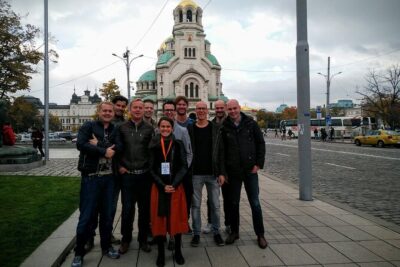
Private Sofia Guided Walking City Tour with Traditional Breakfast
Read our review →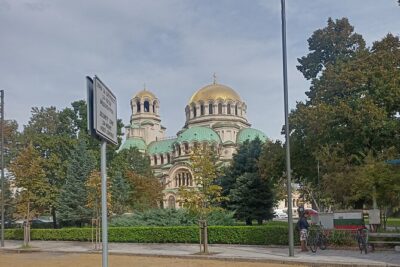
Sofia Hidden Gems: Small-Group Walking Tour with Tram Ride
Read our review →Browse the lists this tour appears in