
Reviewed · SOFIA TOURS
Sofia Communist History 2-Hour Tour in a Classic Trabant
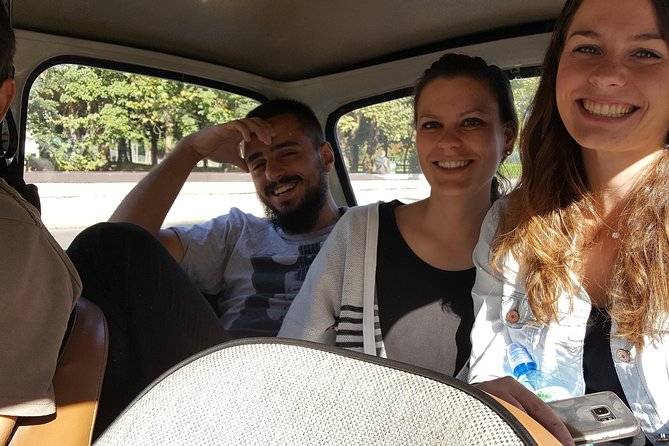
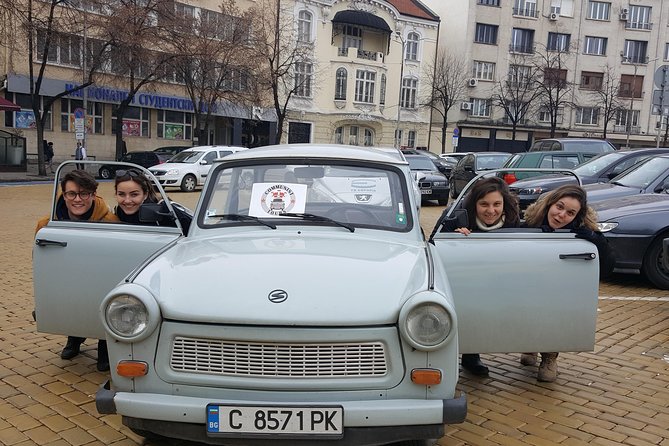
Sofia’s Communist past feels more immediate when you are rattling through the city in an original East German Trabant, the small plastic-bodied car that became a symbol of life behind the Iron Curtain. The car attracts attention everywhere it goes, while your guide connects the streets and monuments to Bulgaria’s political past.
I like the private format for up to three people, since Dany or Rado can adjust the conversation to your interests. I also like the mix of driving and short stops, especially the Museum of Socialist Art and its sculpture garden. The main drawback is the price: at $240.28 per group, this makes the most sense for two or three people sharing the cost, not a solo visitor on a tight budget.
Key points at a glance
- A real Trabant is the star: You ride in an original, well-kept car associated with Communist-era Eastern Europe.
- A compact Sofia history lesson: The route links NDK, the Museum of Socialist Art, the National Assembly area, the National Archives, and the fall of Communism in 1989.
- Private attention: Each booking is limited to three people, so you can ask direct questions and shape the discussion.
- Dany and Rado guide the experience: Their approach includes political history, car history, and personal family stories.
- Useful for a short visit: The tour covers a broad area of Sofia in about two hours, with hotel pickup and drop-off offered at selected hotels.
- Plan ahead: Confirmation can take up to 48 hours, and the experience is commonly booked several weeks before the date.
Why the Trabant changes the Sofia sightseeing experience
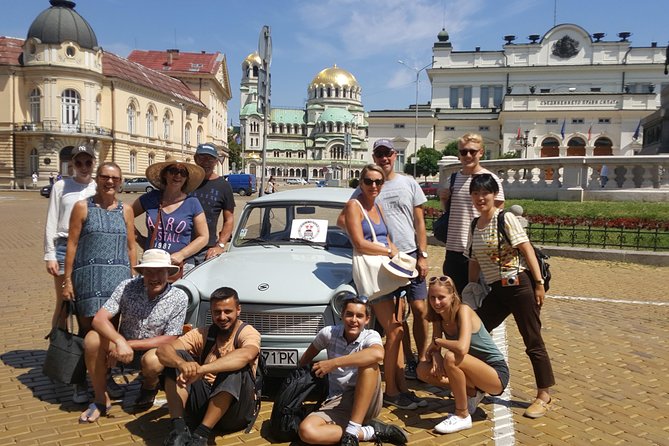
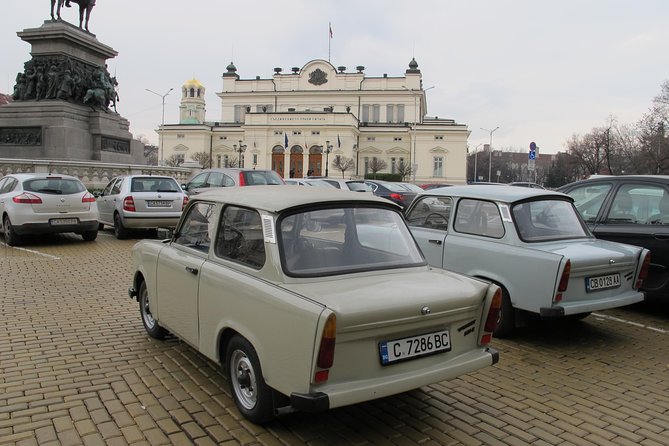
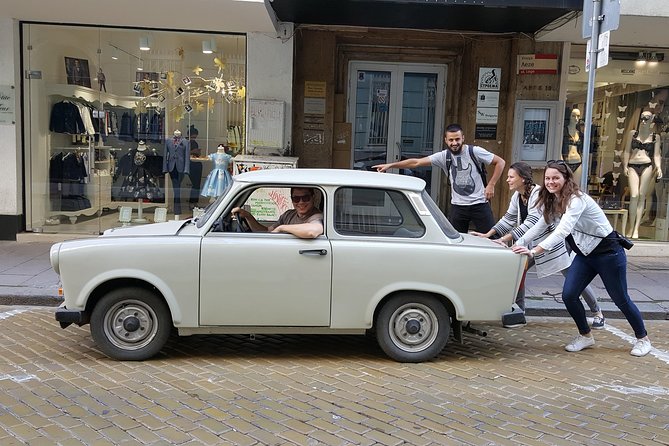
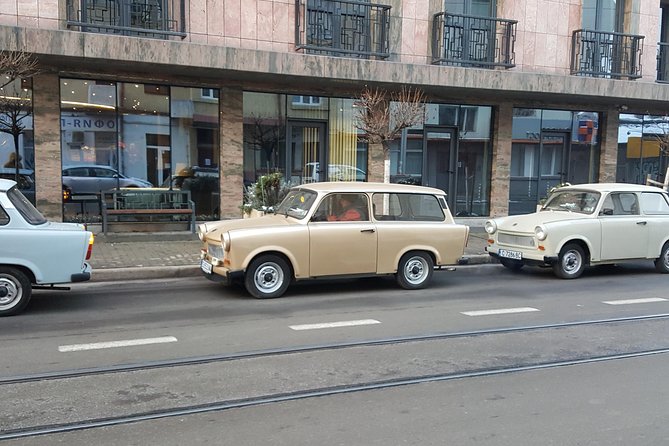
Many city tours use a bus, van, or walking route. This one uses a Trabant, a tiny car produced in the former German Democratic Republic and strongly linked with everyday life in Communist Europe.
That choice is more than a novelty. The car gives the tour a clear sense of place and time. You are not simply hearing about the old system in a museum room. You are moving through modern Sofia in an object that belonged to that earlier world.
The Trabant also makes the tour social. People notice it. One couple described arriving at a hotel where a Ferrari was parked nearby, yet passersby focused on the Trabant instead. That reaction tells you what makes the ride memorable: the car is unusual, instantly recognizable, and a natural conversation starter.
The vehicle is small, so the three-person limit matters. For a couple, it should feel intimate. A group of three can share the cost and still have a private ride, but you should expect a close fit rather than generous car space.
The guides bring more than a standard timeline. Dany has been praised for explaining his own family’s experiences, including life after the fall of the Berlin Wall. Rado has also led the route, and one longer outing with him lasted more than three hours. The advertised duration is about two hours, so allow some flexibility if the discussion grows or an extra sight appears during your visit.
More communist-era history walks:
- Communist Walking Tour of Sofia
★ 5.0 · 690 reviews - Sofia Food & Tasting Tour with Communist-Era Tram Ride
★ 5.0 · 35 reviews - Buzludzha Monument and the Museum of Socialist Art
★ 5.0 · 25 reviews
NDK and the meaning of 1,300 years
The first planned stop is the National Palace of Culture, usually called NDK. You spend about 10 minutes here discussing the building’s significance and the 1,300-year anniversary of the first Bulgarian state.
NDK is an important entry point because it shows how the Communist government used monumental architecture and public ceremonies. The complex was tied to a major national anniversary, making it a useful place to discuss the relationship between Bulgarian identity and state power.
This is a short stop, not a full interior tour. You should think of it as a briefing beside one of Sofia’s major public landmarks. The value comes from the explanation, not from an admission ticket or a long visit inside.
I like this opening because it helps you read the city. Communist-era public buildings were designed to project authority and collective purpose. Once your guide points out those ideas at NDK, later stops make more sense.
Socialist art at the museum and sculpture garden
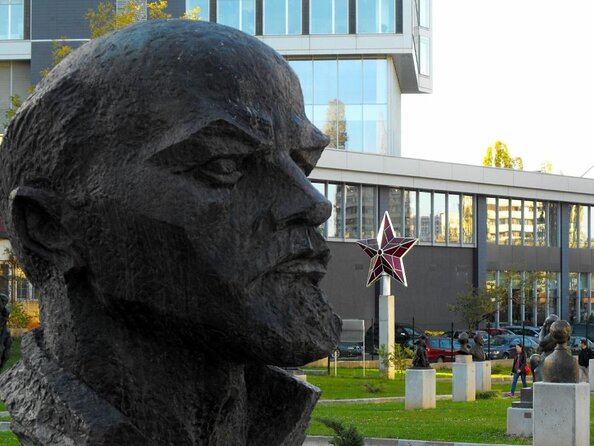
The Museum of Socialist Art receives about 20 minutes of the tour, with admission included. Your guide walks you through the sculptures and artwork and explains what they represented.
For me, this is likely the strongest stop for anyone who wants more than a car ride. Art produced under a state system can reveal what official Bulgaria wanted people to admire: workers, leaders, national symbols, military themes, and carefully selected versions of progress.
The outdoor sculpture garden adds another layer. Large public sculptures are easier to understand when you know where they once appeared and how political symbols were used. A guide can explain the difference between an artwork made for public instruction and one made mainly for personal expression.
Twenty minutes is enough for an introduction, but not enough for a slow museum visit. If socialist art is your main interest, you may wish the stop were longer. The advantage is that the tour keeps moving and gives you several different views of Sofia rather than spending the whole two hours in one place.
The museum also gives the Trabant theme more meaning. The car was part of ordinary life, while the artwork reflects the official image of that life. Seeing both in one outing creates a useful contrast between state ideals and personal experience.
National Assembly, the Archives, and secret police control
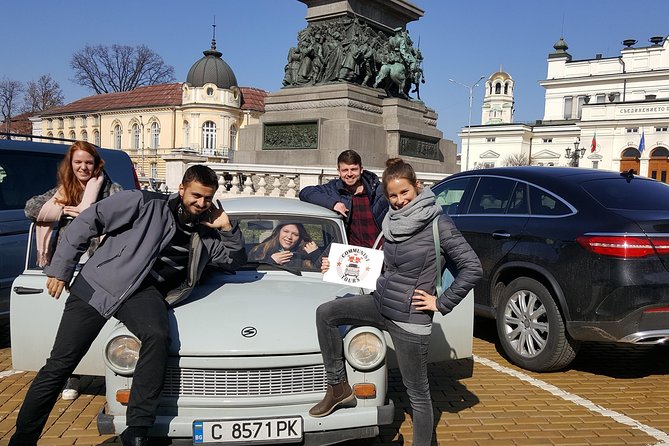
Another stop centers on the National Assembly of the Republic of Bulgaria. Your guide then walks you toward the National Archives and explains how the secret police kept a tight grip on the population.
This part shifts the mood. NDK and the art museum help explain public imagery. The National Assembly and Archives discussion moves toward political control, surveillance, and the machinery behind the public face of the state.
The walk is brief, listed at about 10 minutes, but the subject is serious. You will hear how political developments affected daily life and how the secret police shaped what people could say, do, and organize. That context is especially useful if you know little about Bulgaria beyond the broad label of Eastern Bloc country.
The tour does not present the era as a collection of old buildings. It connects places with institutions. The National Assembly points toward official government, while the Archives discussion points toward records, secrecy, and power. This makes the stop more meaningful than a quick photograph outside a government building.
Because the tour is private, this is a good moment to ask practical questions about ordinary life. The supplied details do not promise access to the National Assembly or Archives, so expect an exterior visit and guided explanation rather than an interior archive tour.
A few more Sofia day trips to weigh up
- Full-day Nis and Serbian History Tour from Sofia
★ 4.5 · 90 reviews - Sofia: History and Heritage – Small Group City Tour
★ 5.0 · 84 reviews - Rila Monastery and St. Ivan Cave History & Nature Trip from Sofia
★ 4.5 · 25 reviews - Bulgarian Food tasting, cullinary-historical tour, Cooking class
★ 4.5 · 15 reviews
How Bulgaria reached 1989
The final historical thread follows the political developments that led to the fall of Communism in 1989. This section ties the sights together and gives the ride a clear ending.
A short tour cannot explain every political shift in Bulgaria. Still, the subject helps you understand why the monuments, artworks, government buildings, and Trabant all belong in the same story. The car represents daily transport and material limits. The public buildings represent state ambition. The Archives and secret police discussion represent control. The events of 1989 show how that system changed.
I appreciate that the tour includes both official history and family experience. Dany has shared personal memories of Bulgaria’s Communist period and the years after the wall fell. That kind of account can make a broad political subject easier to grasp, though your exact guide and conversation will vary.
The experience is not a specialist seminar. It is a brisk introduction delivered while driving around Sofia, with enough stops to give the subject physical reference points. If you already have advanced knowledge of Bulgarian politics, you may want a longer museum visit or a more focused historical tour. For most first-time visitors, the compact format should provide a useful framework.
What the private format is worth
The listed price is $240.28 per group of up to three people. That is a high total for a two-hour activity, but the correct comparison is not a shared sightseeing bus. You are paying for a private guide, a fuel surcharge, the Trabant ride, and hotel pickup and drop-off where available.
For three people, the cost works out to about $80 per person. For two, it is about $120 each. A solo visitor pays the full group rate, so I would be more cautious unless the Trabant itself is a major reason for visiting Sofia.
The private setup has real value. Dany or Rado can spend more time on your questions, adjust the explanation to your interests, and avoid the fixed rhythm of a large group. One person may want family stories and political history. Another may care more about the Trabant’s production and its place in the former East German economy. A private conversation can handle both.
The group limit also keeps the ride personal, though it does not make the car spacious. If you are booking for three adults, confirm that everyone is comfortable with the compact vehicle before committing.
Pickup, meeting point, and timing
The listed meeting point is at ul. Fridtjof Nansen 27 in central Sofia, and the tour ends back at the meeting point. Pickup and drop-off are offered at selected hotels, so you should check that your hotel qualifies rather than assume it is included everywhere.
The tour is offered in English and uses a mobile ticket. Confirmation is sent within 48 hours of booking, subject to availability. Since the experience is often reserved about 27 days ahead, I would not leave it until the last minute, especially if your Sofia visit is short.
The advertised duration is approximately two hours. One outing lasted more than three hours, so keep your schedule loose if you enjoy extended conversations or if the guide adds an unexpected stop. A separate report also described seeing an old-car exhibition in central Sofia during the outing, though that was a fortunate extra rather than a promised part of the route.
There is no food or drink included. That is not a serious issue for a two-hour ride, but you should eat beforehand if you are starting early or going straight to another appointment.
The route is near public transportation, and most people can participate. The supplied information does not give specific details about wheelchair access, child seating, or luggage, so ask the operator before booking if any of those points matter to you.
Who should book this Trabant tour
I would recommend it most strongly to:
- Couples who want a private and unusual Sofia experience
- Small groups of up to three people who can share the price
- Visitors with only a weekend in Sofia
- Anyone interested in Communist-era Europe, Cold War history, or socialist art
- Car enthusiasts who appreciate unusual historic vehicles
- People who prefer personal stories and conversation over a formal museum lecture
It is also a smart first activity if you have just arrived. The car covers a broad part of the city, and the guide gives you a historical map for later sightseeing.
I would hesitate if you want a long museum visit, a walking tour with extensive interior access, or the lowest possible price. The museum stop is short, the listed route is brisk, and the cost is difficult to justify for one person unless the Trabant is the main attraction.
Comfort matters too. The vehicle is authentic, but authenticity can mean a small cabin, old-fashioned fittings, and a ride unlike a modern tour car. One visitor specifically remembered the unusual seatbelt. That is part of the fun, but it may not suit someone looking for polished comfort.
Is two hours enough for Sofia’s Communist story?
Two hours is enough for an introduction, not a full study. You will see several important reference points, hear about the use of public monuments, visit socialist art, learn about secret police control, and discuss the 1989 transition.
The route works because it uses variety. You are not asked to listen to a long lecture in one place. The Trabant keeps the outing moving, while the stops give the history a physical setting.
I would treat this as a focused city orientation. Afterward, you may want to return independently to the Museum of Socialist Art, spend more time around NDK, or seek out other Sofia museums and political landmarks. The tour gives you questions and context, then leaves room for your own follow-up.
My booking advice
Book this tour if you want Sofia history delivered with personality and a memorable visual hook. The Trabant ride is the experience, but the best value comes from combining it with the guide’s explanations and family stories.
For a couple or small group, the private price is easier to defend, especially if you have limited time. Book several weeks ahead when possible, check hotel pickup before paying, and allow more than two hours in your day.
I would skip it only if your priority is a cheap general sightseeing tour or a detailed museum visit. If you want an original way to connect Sofia’s streets with Bulgaria’s Communist past, this is a strong choice.
FAQ
How long is the Sofia Communist History Trabant Tour?
The advertised duration is approximately two hours. Some outings may last longer if the conversation continues or an extra sight appears.
How many people can join one booking?
A maximum of three people can join each booking.
What is the price of the tour?
The price is $240.28 per group of up to three people.
Is the tour offered in English?
Yes. The experience includes an English-speaking driver and guide.
Does the tour include a ride in a Trabant?
Yes. Riding in the classic Trabant is included in the tour.
Is hotel pickup available?
Yes, hotel pickup and drop-off are offered at selected hotels. The listed meeting point is ul. Fridtjof Nansen 27 in central Sofia.
Which sights are included?
The route includes the National Palace of Culture, the Museum of Socialist Art, the National Assembly area, and a walk toward the National Archives. The guide also discusses the political developments that led to the fall of Communism in 1989.
Are food and drinks included?
No. Food and drinks are not included.
Can I cancel for a full refund?
Yes, if you cancel at least 24 hours before the experience start time. Cancellations or changes made less than 24 hours before the start time are not refunded or accepted.
More two-hour experiences in Sofia
- Sofia Highlights 2 Hour Sightseeing Walking Tour
★ 5.0 · 442 reviews - Private 2 Hours Sofia Street Art and Graffiti Tour
★ 5.0 · 3 reviews
Just added around Sofia
- Private Winter Day Trip to the Rila Mountain★ 4.5 · 3 reviews
- Transfer from Sofia to Stara Zagora★ 5.0 · 3 reviews
- Cook and Eat with a Local in Sofia★ 5.0 · 3 reviews
- Private 2 Hours Sofia Street Art and Graffiti Tour★ 5.0 · 3 reviews
- Tour to Koprivshtitsa and the Buzludzha monument incl the Seuthes Thracian Tomb★ 3.5 · 3 reviews
- Private Sofia Tour with Unique Local Food & Drinks Experience★ 4.5 · 3 reviews
- Koprivshtitsa and Starosel Tour★ 4.0 · 3 reviews
- Wine trip with The Jolly Vintners near Sofia★ 5.0 · 3 reviews
Sofia Tours, compared.


Sofia Highlights 2 Hour Sightseeing Walking Tour
Read our review →
Day tour to Skopje, North Macedonia – Small Group
Read our review →
Browse the lists this tour appears in