
Reviewed · WALKING TOURS IN SOFIA
Sofia Highlights 2 Hour Sightseeing Walking Tour
Sofia packs an unusual amount of history into a compact center. On this two-hour walking tour, you move from Alexander Nevsky Cathedral and a royal palace to Roman ruins, a mosque, a synagogue, mineral springs, and the city’s main pedestrian street.
I like the route for two clear reasons: it covers the essential sights without transport, and the licensed guide adds the stories that turn grand buildings into places with meaning. I also like the low price, $19.35, especially if you are in Sofia for a short stay. The main drawback is pace. With roughly twenty stops, most receive only five minutes, so this is an orientation walk rather than a museum tour.
Key points to know before you book
- Alexander Nevsky Cathedral is the main starting point: You meet in front of Sofia’s landmark church and enter during the tour.
- The route connects many faiths and eras: Orthodox, Catholic, Jewish, and Muslim sites appear alongside Roman ruins and communist-era government buildings.
- You can try Sofia’s mineral water: The springs help explain why the city developed here.
- The walk ends on Vitosha Boulevard: You can continue with lunch or more sightseeing right away.
- Nikola is one named guide: He is described as friendly, clear, and happy to answer questions, though guide assignment can vary.
- The group may be as large as 30 people: That keeps the price low, but a smaller group is easier to hear and manage.
Why this compact Sofia walk works
The best thing about the tour is its range. In a short stretch of central Sofia, you see traces of Roman Serdika, Bulgaria’s Orthodox tradition, the former royal court, communist reconstruction, and the city’s present-day public life.
That makes this a useful first activity. You will not study every building in detail, but you will learn where the main sights are and how they fit together. At the end, you are positioned near Vitosha Boulevard, where you can keep exploring on foot.
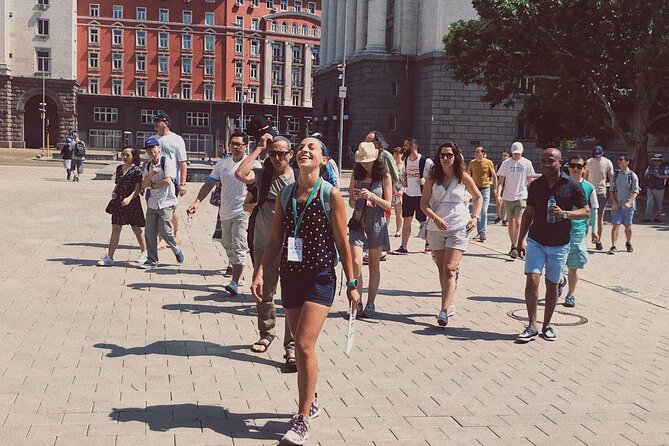
The advertised group limit is 30 people. That is not a tiny private walk, but the experience can be much smaller. One person described having the guide alone, while another singled out Nikola for making the tour feel relaxed and personal. You should not count on a private walk, but the small-group possibility is a nice bonus.
The walk begins at 11:00 a.m. and lasts about two hours. Wear shoes suitable for city pavement, and allow extra time before the start to find the cathedral meeting point. The route is central and near public transportation, so it is easy to connect with the rest of your day.
More Walking Tours in Sofia
- Communist Walking Tour of Sofia
★ 5.0 · 690 reviews - Guided Walking Tour of Sofia
★ 5.0 · 143 reviews - Private city walking tour of Sofia
★ 5.0 · 141 reviews
Alexander Nevsky Cathedral sets the tone
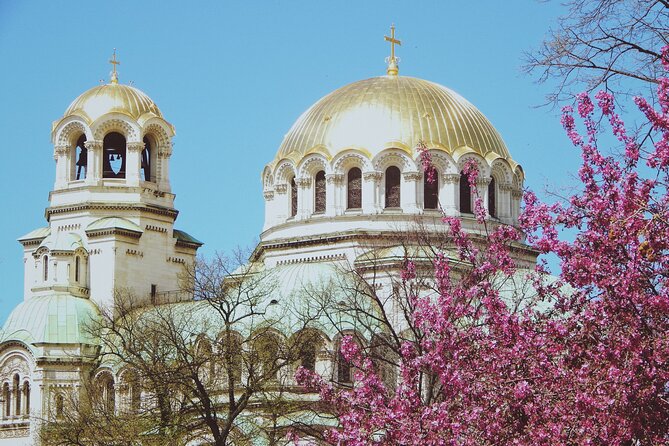
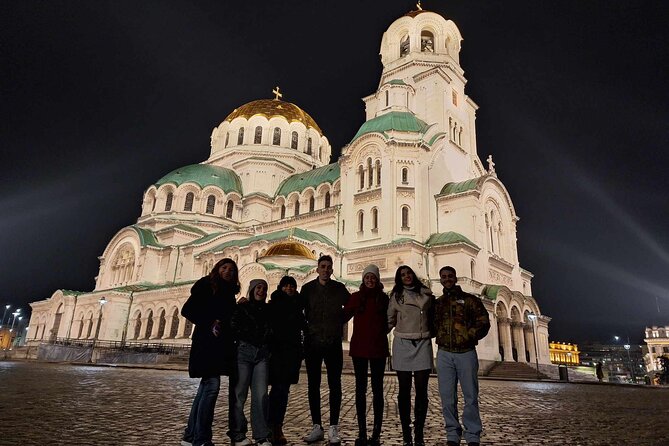
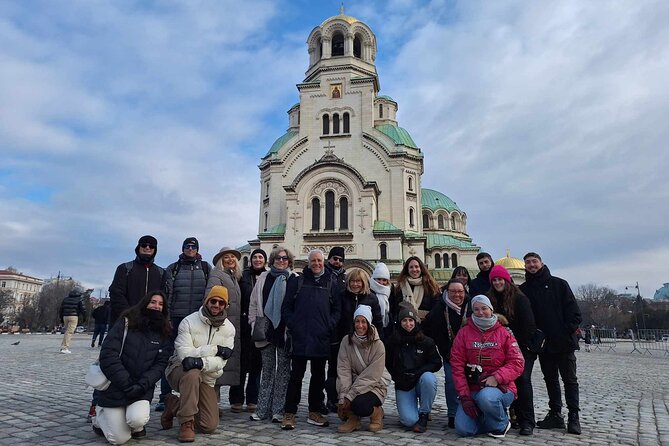
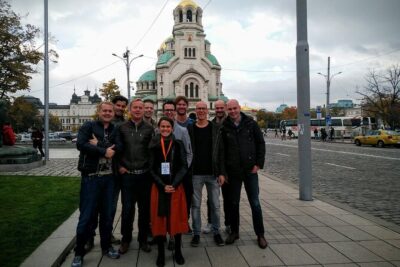
Meet your guide in front of the Patriarchal Cathedral of St. Alexander Nevsky. This is the longest stop, at about 20 minutes, and it gives the tour a strong opening.
The guide begins with an overview of Sofia and Bulgaria before explaining the cathedral’s history. You also enter the building, an important point because the interior is part of the experience rather than something you only view from the square.
This opening works well for first-time visitors. The cathedral is one of Sofia’s defining sights, and starting here gives you a clear meeting place that is hard to confuse with an ordinary street corner.
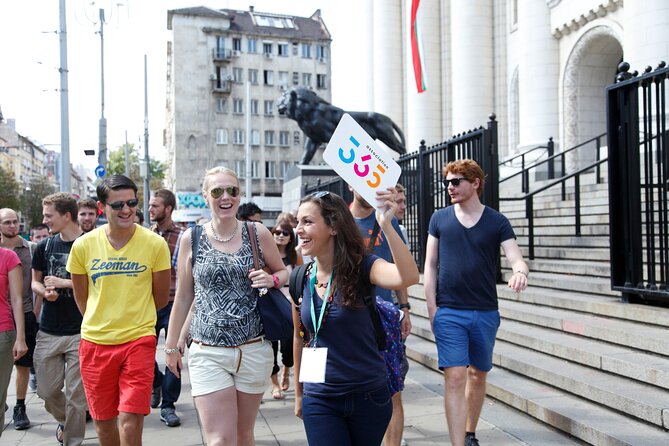
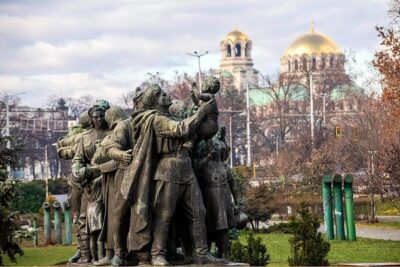
From there, the tour moves to the Monument to the Unknown Warrior. The lion statue and memorial honor Bulgarian heroes, and the guide explains the lion’s meaning. It is a short stop, only about five minutes, but it adds national symbolism to the first part of the walk.
Sofia’s name begins at Saint Sofia
Next comes the Basilica of Saint Sofia, the church that gave the city its name. The stop is brief, yet the connection between the church and the city is exactly the sort of detail that helps you remember Sofia after you leave.
The route then reaches Saint Nikolas Russian Church. This small church is linked with the local belief that it can make wishes come true. The guide explains the story, giving you a bit of popular tradition alongside the official history.
You then pass the National Art Gallery, housed in Bulgaria’s former Royal Palace. The same building also contains the National Ethnographic Museum. The tour points out the yellow cobblestones around it as well, an urban detail that is easy to miss when you are rushing from one major sight to the next.
Admission to the National Art Gallery and National Ethnographic Museum is not included. The tour does not provide time for a full visit, so you should plan a separate stop if the collections interest you.
A pause near the theater and city park
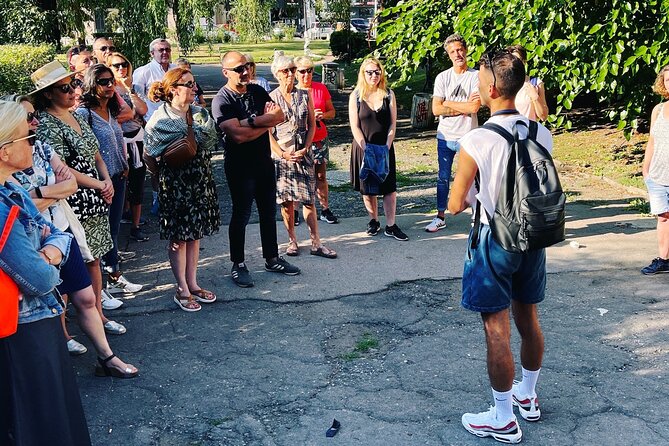
The route continues through a park favored by locals. The description emphasizes its youthful atmosphere, so this part gives you a break from monuments and formal buildings.
The exact park is not identified, but it is presented as a place where you can sense a younger side of Sofia. That contrast matters. The tour is not only a march between historic sites. It also gives you a quick look at how central Sofia feels today.
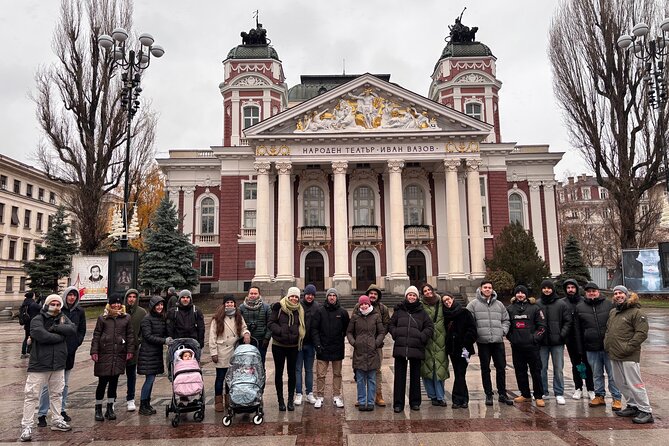
The Ivan Vazov National Theater follows. The building is one of Sofia’s most admired, and it is dedicated to Ivan Vazov, one of Bulgaria’s best-loved authors. You receive about five minutes here, enough for an outside look and a short explanation.
Admission is not included. Since the tour focuses on the exterior, you will need a separate visit if you want to attend a performance or see more of the building.
Same base, a completely different day out:
- Rila Monastery and Boyana Church Full-Day Tour
★ 4.5 · 918 reviews - Sofia Escape Room – Teorema Rooms
★ 5.0 · 895 reviews - From Sofia: Rila Monastery & Boyana Church Day Tour
★ 4.5 · 866 reviews - Admission Ticket to the Museum of Illusions in Sofia
★ 5.0 · 659 reviews
Roman Sofia appears behind the modern center
The Rotunda Church of St. George is one of the most rewarding stops on the route. Sofia’s oldest building is tucked among newer surroundings, and it reflects the city’s Roman past.
The short visit is a reminder that central Sofia is built over older layers. You do not need a long lecture to grasp the point: modern government offices, shops, and roads occupy ground that once belonged to ancient Serdika.
The National Institute of Archaeology with Museum adds another layer. The building was once a mosque and now houses Sofia’s oldest museum. Again, the tour gives you an outside introduction, not museum admission or a long gallery visit.
If you enjoy archaeology, mark this location for a return visit. The walking tour gives you the context, while a later museum stop would let you spend time with the actual objects and displays.
The Presidency and the Largo explain modern Bulgaria
At the Presidency Building, Bulgarian National Guards are positioned in front. Your guide explains the symbolism of this unusual duty, and you can take a picture with them.
This is a practical photo opportunity, but it also connects the formal government district with everyday sightseeing. The stop is short, so listen closely for the explanation rather than treating it only as a photo break.
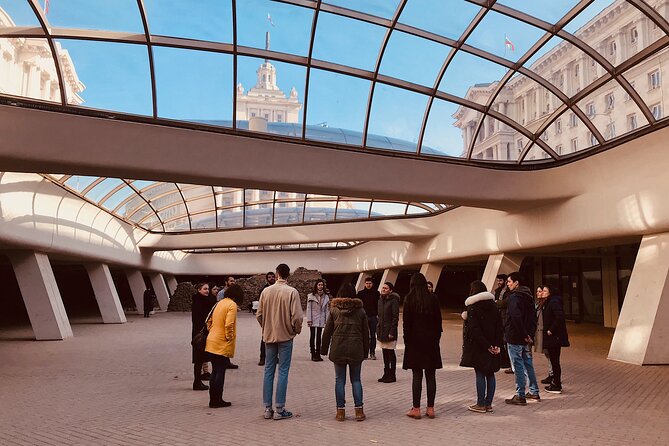
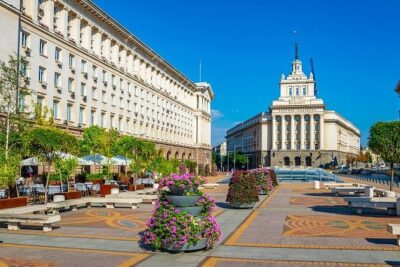
The National Assembly appears as part of the Largo, the broad central area shaped from the ruins of World War II by the new communist government. The tour points out the Council of Ministers, the National Assembly, and the Presidency.
This is one of the most useful history sections because it explains how Sofia’s center was rebuilt to express the strength of the communist regime. You see government power in architectural form, not just in a textbook paragraph.
The Largo stop lasts about 10 minutes, longer than most stops apart from the cathedral. That extra time is welcome because the area contains several major buildings and a complicated political story.
Mineral baths and springs reveal another Sofia
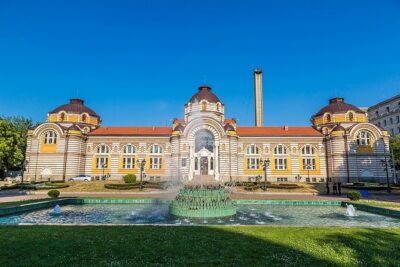
The Sofia History Museum occupies the former Central Mineral Baths. The building’s earlier purpose leads naturally to the next stop, Sofia’s mineral water springs.
Sofia developed in this location partly because of its mineral waters. During the tour, you can try the water yourself. The guide says it has healing powers, but treat that as local tradition rather than a medical claim.
This is one of the most hands-on moments in an otherwise visual walk. Bring a reusable bottle if you want to carry some water, though the supplied details do not specify how the springs are arranged or whether a cup is provided.
The museum itself is not included as an admission visit. If you want to explore Sofia’s past in greater detail, it is a sensible place to return after the tour, particularly because you will already understand the building’s original role.
Sofia’s religious mix comes into view
The Sofia Synagogue is described as the largest on the Balkan peninsula. The guide shares the extraordinary story of Bulgaria’s Jewish community, making this more than a quick architectural stop.
The route then reaches Banya Bashi Mosque, Sofia’s only functioning mosque. Here you hear about Bulgaria’s Muslim community and see how the mosque fits into the city center.
These two stops are especially valuable together. They show that Sofia is not defined by one religious tradition. The walk places Jewish and Muslim history next to Orthodox and Catholic landmarks, helping you see the city as a meeting point of different communities.
Admission to the synagogue is not included, while the mosque stop is listed with free admission. The schedule allows only about five minutes at each, so do not expect interior tours or extended visits. If either building is a priority, use this walk to locate it and return later with more time.
Ancient Serdika sits below today’s streets
The Ancient Serdika Archaeological Complex brings the Roman story into direct view. Below modern Sofia’s center are the remains of the ancient city, and the route takes you around the excavations.
This is a strong location for understanding Sofia’s age. The city is not simply home to a few isolated old buildings. Its earlier streets and structures are part of the ground beneath the present center.
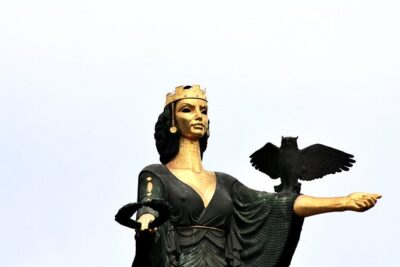
The Monument of Saint Sofia follows. The statue honors Sofia as the city’s patron, and the guide explains the controversy surrounding it. That detail keeps the stop from becoming a simple monument photo. Public statues often reveal what a city chooses to celebrate, and what remains disputed.
The route then reaches the Catholic Cathedral of St. Joseph, Sofia’s largest Catholic church. You hear about Bulgaria’s small Catholic community, adding another perspective to the religious story already introduced by the synagogue and mosque.
Saint Nedelya brings a difficult final chapter
The last major landmark is Saint Nedelya Orthodox Cathedral. Here the guide tells the tragic story of the largest terrorist attack in Bulgaria.
It is a serious subject, and its placement near the end gives the tour a sobering close. Sofia’s past is not presented as a string of pretty buildings. Political violence, religious identity, war, monarchy, communism, and public memory all appear along the same short route.
The tour then finishes beside the start of Vitosha Boulevard. This is a practical ending. You can look for lunch at one of the nearby restaurants, continue along Sofia’s main pedestrian street, or use the central location to reach another part of town.
What the $19.35 price really buys you
At $19.35 per person, the price is low for a licensed, English-speaking guide leading a two-hour route through so many major sights. The value comes from the organization and explanation, not from included attractions.
You receive entry to Alexander Nevsky Cathedral as part of the guided visit, and the route includes free-access stops such as the Monument to the Unknown Warrior, the Rotunda area, mineral springs, the mosque, Serdika excavations, and several churches. Museum admission is not included at the National Art Gallery, National Ethnographic Museum, National Institute of Archaeology, Sofia History Museum, or the National Assembly and Presidency areas.
Tips are also not included. Carry a little cash if you want to thank the guide, but tipping is optional.
The high overall rating, 4.9 from 442 reviews, and 99 percent recommendation figure suggest that the format works well for many people. The strongest praise centers on the guides, especially Nikola, who is described as friendly, reassuring, and willing to answer questions in detail. That personal contact is the main reason to choose a guided walk instead of following a map alone.
Who should book this walking tour
I would choose this tour if you have only a day or two in Sofia, want a clear first look at the center, or prefer history explained in plain language. It also suits you if you want to combine major Orthodox sites with Jewish, Muslim, and Catholic landmarks.
It is a good fit for most people because the activity is near public transportation and most visitors can participate. Service animals are allowed. Still, it is a walking tour with a tight schedule, so you should be comfortable moving between stops and spending much of the two hours on your feet.
I would not choose it as your only Sofia activity if you want long museum visits, detailed architectural study, or time inside every church. The five-minute stops are introductions. Use them to decide where to return.
Free cancellation is available up to 24 hours before the 11:00 a.m. start time. Changes or cancellations inside that window are not refunded. The activity depends on good weather and a minimum number of participants. If the operator cancels for either reason, you are offered another date or experience, or a full refund.
Should you book the Sofia Highlights walk?
Book it if you want a fast, well-planned introduction to central Sofia at a modest price. The cathedral entry, mineral-water stop, Roman remains, government district, and mix of religious sites give you more range than a simple monument walk.
Skip it if you would rather explore at your own pace or spend two hours inside museums. For most first visits, I see it as a smart starting point: take the tour in the morning, note the places that deserve more time, then finish on Vitosha Boulevard with lunch and your own afternoon route.
FAQ
Where does the Sofia Highlights walking tour start?
The tour starts in front of the Patriarchal Cathedral of St. Alexander Nevsky at Sofia Center, pl. Sveti Aleksandar Nevski, 1000 Sofia, Bulgaria.
What time does the tour begin?
The scheduled start time is 11:00 a.m.
Where does the tour finish?
The tour ends at Sofia Center, bul. Vitosha 1, beside the beginning of Vitosha Boulevard.
How long does the tour last?
The walking tour lasts approximately two hours.
Is the tour offered in English?
Yes. The experience is offered in English and includes an official licensed local tour guide.
Are museum admissions included?
No. Admission is not included for the National Art Gallery, National Ethnographic Museum, National Institute of Archaeology with Museum, Sofia History Museum, or the other locations marked as not included. The guided visit does include entry to Alexander Nevsky Cathedral.
Can I cancel for a full refund?
Yes, if you cancel at least 24 hours before the experience start time. Cancellations or changes made less than 24 hours before the start are not refunded.
More two-hour experiences in Sofia
- Sofia Communist History 2-Hour Tour in a Classic Trabant
★ 5.0 · 45 reviews - Private 2 Hours Sofia Street Art and Graffiti Tour
★ 5.0 · 3 reviews
Just added around Sofia
- Private Winter Day Trip to the Rila Mountain★ 4.5 · 3 reviews
- Transfer from Sofia to Stara Zagora★ 5.0 · 3 reviews
- Cook and Eat with a Local in Sofia★ 5.0 · 3 reviews
- Private 2 Hours Sofia Street Art and Graffiti Tour★ 5.0 · 3 reviews
- Tour to Koprivshtitsa and the Buzludzha monument incl the Seuthes Thracian Tomb★ 3.5 · 3 reviews
- Private Sofia Tour with Unique Local Food & Drinks Experience★ 4.5 · 3 reviews
- Koprivshtitsa and Starosel Tour★ 4.0 · 3 reviews
- Wine trip with The Jolly Vintners near Sofia★ 5.0 · 3 reviews
Walking Tours in Sofia, compared.
Private Sofia Guided Walking City Tour with Traditional Breakfast
Read our review →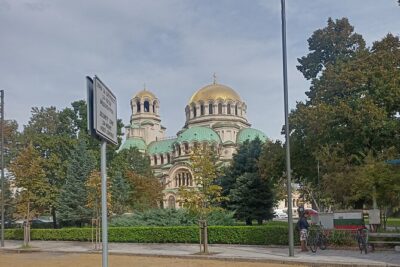
Sofia Hidden Gems: Small-Group Walking Tour with Tram Ride
Read our review →Browse the lists this tour appears in